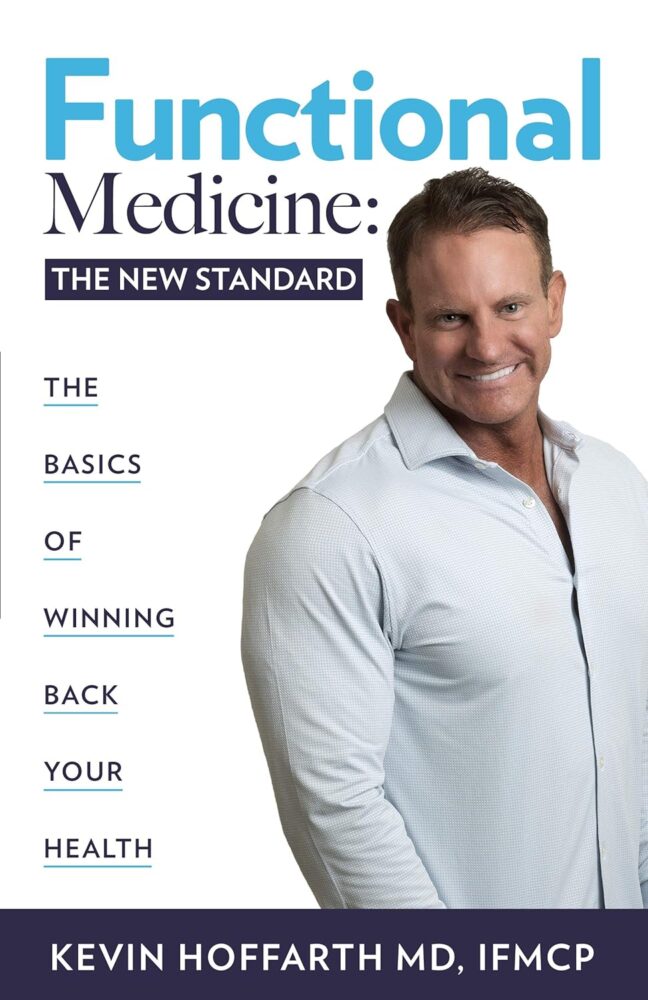
When reading Dr Kevin Hoffarth’s book, entitled Functional Medicine: The New Standard: The Basics of Winning Back Your Health, I was struck by the similarity between the approach which we take at Jacquelyne Morison Hypnotherapy Training to analytical hypnotherapy and the philosophy of functional medicine. Both approaches emphasise the importance of root-cause resolution rather than symptomatic relief and the application of coping mechanisms.
Dr Hoffarth describes functional medicine succinctly as:
Functional medicine is a science-based, comprehensive approach to treating the whole person.
What is functional medicine?
Functional medicine is, essentially, a methodology which tackles the root-cause of disease and ill-health. Functional medicine will, consequently, focus on the importance of the health of the viscera, the immune system, the endocrine system, the gastro-intestinal tract, the resolution of allergic responses and the patient’s toxic overload. Functional medicine will also consider the patient’s nutritional status, exercise regime, stress-levels and sleep-patterns as well as the need for fresh air, clean water and sunshine coupled with a dearth of junk food, recreational drugs and unnecessary chemical medication.
Functional medicine differs profoundly from conventional medical practice but this relatively new yet revolutionary medical discipline will, in fact, tap into the vast body of medical knowledge and evidence-based research readily available.
When speaking of the changeover from conventional medicine to function medicine Dr Hoffarth advises the patient that:
It requires a radical shift in thinking that upends everything and opens up new possibilities.
What is standard medical practice?
The conventional medical practitioner will treat only the patient’s symptoms and often the approach is, at best, that the physician will dish out prescription drugs or give time off work or, at worst, that the patient will receive pointless surgery with little hope for the future. Conventional medics are trained to make a rapid diagnosis after only a short consultation and are then encouraged to refer patients to high-earning specialists whenever possible. Kevin Hoffarth’s opinion, and mine, is that standard medical practice lamentably fails the average patient by not even attempting to address the root-cause of the patient’s disease and malaise. Standard Western medicine, however, with its high tech emphasis is supreme at handling emergencies and life-threatening injury but is of little use for the majority of ailments and diseases which are commonplace today.
What are the similarities?
The parallels between functional medicine and analytical hypnotherapy can be summarised as set out below.
| Functional medicine | Analytical hypnotherapy |
| The practitioner will take a comprehensive case-history of the patient in order to attain a complete health picture from birth to the present | The practitioner will take a comprehensive case-history of the client in order to allow him/her to see his/her psychological health as a big picture |
| The patient will be encouraged to take responsibility for his/her own health without relying heavily on the practitioner as a god-like dictator | The client will be encouraged to acknowledge that she/he has all the inner wisdom for his/her own healing journey |
| The patient will be asked to appreciate that the practitioner is merely a guide and not an all-knowing dictator or dispenser of wisdom | The client will be invited to realise that the practitioner is merely a facilitator and not a prophetic oracle |
| The patient will come to realised that there is no easy answer and no quick-fix when it comes to recovery from long-term disease | The client will come to realise that there is no one-size-fits-all process which can remedy psychological ill-health |
| The patient will be encouraged to realise that his/her body contains its own self-healing mechanism which can be readily activated | The client will be encouraged to appreciate that his/her inner mind can secure his/her own resolution from psychological pain |
| The practitioner will appreciate that the human body is a highly complex organism of interlaced systems and processes according to the holographic mind-body principal | The practitioner will realise that the human mind has infinite potential and complexity and that there can be no superficial vehicle for the healing journey |
| The patient will be able to strengthen his/her resources and resilience to future ill-health | The client will be empowered to resist the impact of day-to-day stress in the future |
| The patient will be encouraged to understand that the body is not simply a series of unrelated parts | The client will be encouraged to understand that the mind and the body are inter-related |
| The patient will be treated with natural remedies, herbal medicine and nutritional supplements in order to effect a lasting cure | The patient will be invited to employ his/her own imaginative, creative and reasoning faculties in order to effect a resolution |
| The patient will find himself/herself becoming more aware of his/her body, his/her true health picture and the path to recovery | The client will be invited to acknowledge the manner in which his/her mind has engaged in pretence and denial |
What are the dissimilarities?
The only point on which I would disagree with Kevin Hoffarth’s thinking is concerned with his chapter entitled “Mind Over Matter” in which he takes an ostensibly cognitive-behavioural approach when assisting the patent to overcome intransigence and lack of compliance with his/her healing process. I think Hoffarth is missing a trick here but possibly this is because he does not realise that there is a better alternative to positive thinking, relaxation and meditative practice.
Cognitive-behavioural therapy commits a comparable sin to allopathic medicine in that the philosophy focuses on symptoms and makes no attempt to identify and to resolve the root-cause of the client’s psychological issues. Functional medicine, as described by Hoffarth, therefore, uses root-cause resolution for the body but cognitive-behavioural techniques for the mind, thereby creating a mismatch.
So perhaps the functional medical practitioner could acquire psychic enlightenment by investigative analytical hypnotherapy from personal experience in order to gain an in-depth understanding of the way in which the human mind works? Every alternative health care practitioner, whether allopathic or alternative, should, in my view, take self-responsibility and investigate his/her own mind as a broad-spectrum and ethical way of assisting his/her clients. So many practitioners have adopted a blinkered and narrowly-focused view of treating clients or patients which is unwise both for the practitioner and for his/her patient.
Jacquelyne Morison
Jacquelyne Morison Hypnotherapy Training